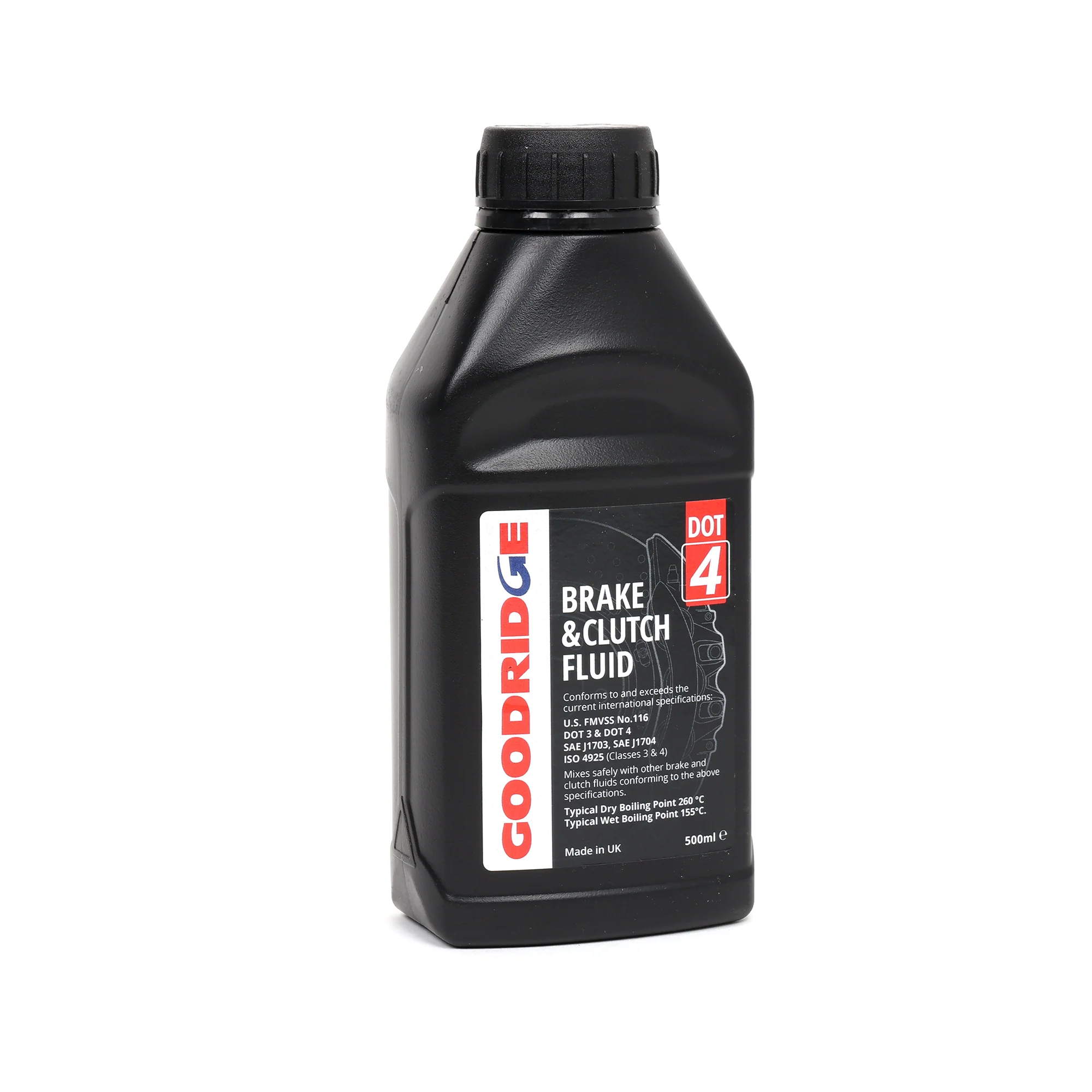
Motul RBF 600/660 Racing DOT 4 Brake Fluid
- Sold in 500 mL Bottles
- Dry Boiling Point of 325°C
- High Wet Boiling Point of 216°C
- Specially Designed for Racing Applications
- Description
- Vehicle Fitment
- Technical Data
- Included
- Install Guide
-
Motul RBF 600 & RBF 660 Racing DOT 4 Brake Fluid - 500mL
If you've ever felt your brake pedal go soft mid-session, you already know what boiling brake fluid feels like. It's terrifying, and it's completely avoidable. Motul's RBF racing brake fluids are fully synthetic DOT 4 fluids built to laugh at temperatures that turn stock fluid into vapor. You've got two to choose from here, RBF 600 and RBF 660, and picking the right one isn't just about grabbing the bigger number. Here's how to decide.
Why Your Brake Fluid Boils Before Your Pads Give Up
Here's what's actually happening out there. Your pads and rotors dump heat into your calipers, and your calipers cook the fluid sitting right next to the pistons. It doesn't take a full track day to get there, one aggressive session at a tight circuit with heavy braking zones can spike caliper temps enough to boil stock fluid. Once it boils, you've got vapor in your lines, and vapor compresses. That's your pedal going to the floor. For reference, regular DOT 4 fluid starts boiling around 230°C dry and 155°C wet, so both of these Motul fluids give you a serious buffer before any of that happens.
RBF 600 vs RBF 660: Which One Do You Actually Need?
This is the decision, and it's not as obvious as you'd think. Yes, the 660 has the higher dry boiling point, but flip it over and the 600 actually holds a higher wet boiling point. They're different tools for different jobs:
Motul RBF 600 Motul RBF 660 Dry Boiling Point 312°C (594°F) 328°C (622°F) Wet Boiling Point 216°C (421°F) 204°C (399°F) Best For Street, track days, aggressive driving Competition, endurance, extreme heat Strength Stays stable longer as it absorbs moisture Highest peak heat resistance Flush Interval Every 2-3 track events After every event Go with RBF 600 if your car sees the street plus track days, or if the fluid's going to sit in your system for a while between sessions. That 216°C wet boiling point is exceptionally high for a DOT 4 fluid, and since fluid spends most of its life in a wet state, that number is what you're actually relying on day to day. For the vast majority of people running a track-day Civic, an Si, or a weekend Integra, the 600 is the smart pick.
Go with RBF 660 if you're in competition, running endurance sessions, or you're on carbon or ceramic brakes that generate serious heat. That 328°C dry boiling point is the highest safety margin you can get against fade when you're truly hammering the brakes. Just be honest with yourself about the trade: the 660's wet boiling point is lower than the 600's, so it needs flushing more often to stay ahead of it. Race car? Perfect. Car that sits in a garage for two months between events? The 600 is probably the better call.
The Wet Boiling Point Is The Number That Actually Matters
Here's what most people miss. Brake fluid is hygroscopic, which means it constantly absorbs moisture out of the air, even right through your brake lines. That moisture drops the boiling point fast. A fresh bottle of budget racing fluid might advertise an impressive dry boiling point, but after a few months in your car, the wet boiling point is what you're actually braking on. That's exactly why the 600's 216°C wet number is such a big deal, and exactly why the 660, for all its dry-heat muscle, wants a more aggressive flush schedule. Pick your fluid based on how you use the car, not just the biggest number on the bottle.
Steel, Carbon, Or Ceramic, Both Fluids Handle It
Running a stock steel setup on a track-day Civic? Either fluid works. Running carbon or ceramic brakes on a dedicated race car? That's exactly where the 660 earns its keep, since carbon and ceramic systems run significantly hotter than steel. Both fluids are compatible with all hydraulic brake and clutch systems, and both meet FMVSS 116 DOT 4, SAE J 1703, and ISO 4925 standards, so they're not track-only solutions, they're street legal too.
Change It After Every Event. No Exceptions.
Heat cycles break down the fluid's additives and lower its boiling point even when it never actually boils. If you're racing wheel-to-wheel, flush and replace after every event, and that goes double for the 660. If you're doing track days on RBF 600, change it every 2-3 events minimum. And don't just top off, flush the entire system. Mixing fresh fluid into old, heat-cycled fluid defeats the whole point. Brake fluid is cheap. Brake repairs, and the alternative, are not. One 500mL bottle is enough for a full system flush on most cars.
Common Questions
Is RBF 660 just better than RBF 600?
Not automatically. The 660 has a higher dry boiling point (328°C vs 312°C), but the 600 has a higher wet boiling point (216°C vs 204°C). Since fluid absorbs moisture over time, the 600 often stays stable longer between flushes, which makes it the better choice for street and track-day cars. The 660 is for competition and extreme heat where you're flushing constantly anyway.Can I use these on the street?
Yes. Both meet FMVSS 116 DOT 4, SAE J 1703, and ISO 4925 standards and work in any hydraulic brake system.Can I mix RBF 600 and RBF 660?
You can, they're both DOT 4 glycol-based fluids, but don't. Mixing means you end up somewhere in the middle and you have no idea what your actual boiling point is. Flush the system and run one or the other.Will these work in my clutch system too?
Yes, both are designed for hydraulic brake and clutch systems, so if you're running a hydraulic clutch, you can use the same fluid.How many bottles do I need?
One 500mL bottle handles a full flush on most cars. If you've got a big brake kit, long lines, or you want to flush aggressively, grab two. These are sold individually, so order as many as your system needs.What You Get
- Motul racing brake fluid, 500mL bottle, sold individually
- Choice of RBF 600 or RBF 660
- RBF 600: 312°C (594°F) dry, 216°C (421°F) wet boiling point
- RBF 660: 328°C (622°F) dry, 204°C (399°F) wet boiling point
- Fully synthetic DOT 4 formula
- Meets FMVSS 116 DOT 4, SAE J 1703, and ISO 4925 standards
- Compatible with all hydraulic brake and clutch systems
- Works with steel, carbon, and ceramic brake systems
- Street legal
Storage And Use Notes
Keep unopened bottles in a cool, dry place. Once you crack the seal, use the whole bottle or toss what's left, an open bottle absorbs moisture fast and degrades quickly. Always flush your full brake system when changing fluid, and don't top off old fluid with new. Get all the heat-cycled fluid out before adding fresh RBF.
Note: Motul RBF racing brake fluid in a 500mL bottle, available as RBF 600 or RBF 660 and sold individually. Both are fully synthetic DOT 4 racing brake fluids for hydraulic brake and clutch systems, compatible with steel, carbon, and ceramic brake systems, and both meet FMVSS 116 DOT 4, SAE J 1703, and ISO 4925 standards. RBF 600 has a dry boiling point of 312°C (594°F) and a wet boiling point of 216°C (421°F). RBF 660 has a dry boiling point of 328°C (622°F) and a wet boiling point of 204°C (399°F); note that while RBF 660 offers a higher dry boiling point for extreme and competition use, RBF 600 offers a higher wet boiling point and generally stays stable longer as the fluid absorbs moisture. Brake fluid is hygroscopic and its boiling point drops as it absorbs moisture, so the full system should be flushed regularly rather than topped off; flush after every event for competition use, or every 2-3 events for track-day use. One 500mL bottle is sufficient for a full system flush on most vehicles. One bottle per order.
-
Universal fit - compatible with all hydraulic brake and clutch systems. Works with steel, carbon, and ceramic brake rotors. DOT 4 compatible with any vehicle that uses DOT 3, DOT 4, or DOT 5.1 brake fluid (do not use with DOT 5 silicone-based systems).
-
Fluid Type Fully Synthetic DOT 4 Dry Boiling Point 312°C (594°F) Wet Boiling Point 216°C (421°F) Volume 500 mL (16.9 fl oz) Color Clear to Light Yellow Base Glycol Ether / Borate Ester Compliance Standards FMVSS 116 DOT 4, SAE J 1703, ISO 4925 Compatible Systems All hydraulic brake and clutch systems (DOT 3, DOT 4, DOT 5.1 compatible - NOT for use with DOT 5 silicone systems) Compatible Brake Types Steel, Carbon, Ceramic Street Legal Yes Recommended Change Interval After every race event; every 2-3 track days minimum; annually for street use -
- (1) Motul RBF 600 Racing DOT 4 Brake Fluid - 500 mL bottle
Original: $19.85
-65%$19.85
$6.95Product Information
Product Information
Shipping & Returns
Shipping & Returns
Description
- Sold in 500 mL Bottles
- Dry Boiling Point of 325°C
- High Wet Boiling Point of 216°C
- Specially Designed for Racing Applications
- Description
- Vehicle Fitment
- Technical Data
- Included
- Install Guide
-
Motul RBF 600 & RBF 660 Racing DOT 4 Brake Fluid - 500mL
If you've ever felt your brake pedal go soft mid-session, you already know what boiling brake fluid feels like. It's terrifying, and it's completely avoidable. Motul's RBF racing brake fluids are fully synthetic DOT 4 fluids built to laugh at temperatures that turn stock fluid into vapor. You've got two to choose from here, RBF 600 and RBF 660, and picking the right one isn't just about grabbing the bigger number. Here's how to decide.
Why Your Brake Fluid Boils Before Your Pads Give Up
Here's what's actually happening out there. Your pads and rotors dump heat into your calipers, and your calipers cook the fluid sitting right next to the pistons. It doesn't take a full track day to get there, one aggressive session at a tight circuit with heavy braking zones can spike caliper temps enough to boil stock fluid. Once it boils, you've got vapor in your lines, and vapor compresses. That's your pedal going to the floor. For reference, regular DOT 4 fluid starts boiling around 230°C dry and 155°C wet, so both of these Motul fluids give you a serious buffer before any of that happens.
RBF 600 vs RBF 660: Which One Do You Actually Need?
This is the decision, and it's not as obvious as you'd think. Yes, the 660 has the higher dry boiling point, but flip it over and the 600 actually holds a higher wet boiling point. They're different tools for different jobs:
Motul RBF 600 Motul RBF 660 Dry Boiling Point 312°C (594°F) 328°C (622°F) Wet Boiling Point 216°C (421°F) 204°C (399°F) Best For Street, track days, aggressive driving Competition, endurance, extreme heat Strength Stays stable longer as it absorbs moisture Highest peak heat resistance Flush Interval Every 2-3 track events After every event Go with RBF 600 if your car sees the street plus track days, or if the fluid's going to sit in your system for a while between sessions. That 216°C wet boiling point is exceptionally high for a DOT 4 fluid, and since fluid spends most of its life in a wet state, that number is what you're actually relying on day to day. For the vast majority of people running a track-day Civic, an Si, or a weekend Integra, the 600 is the smart pick.
Go with RBF 660 if you're in competition, running endurance sessions, or you're on carbon or ceramic brakes that generate serious heat. That 328°C dry boiling point is the highest safety margin you can get against fade when you're truly hammering the brakes. Just be honest with yourself about the trade: the 660's wet boiling point is lower than the 600's, so it needs flushing more often to stay ahead of it. Race car? Perfect. Car that sits in a garage for two months between events? The 600 is probably the better call.
The Wet Boiling Point Is The Number That Actually Matters
Here's what most people miss. Brake fluid is hygroscopic, which means it constantly absorbs moisture out of the air, even right through your brake lines. That moisture drops the boiling point fast. A fresh bottle of budget racing fluid might advertise an impressive dry boiling point, but after a few months in your car, the wet boiling point is what you're actually braking on. That's exactly why the 600's 216°C wet number is such a big deal, and exactly why the 660, for all its dry-heat muscle, wants a more aggressive flush schedule. Pick your fluid based on how you use the car, not just the biggest number on the bottle.
Steel, Carbon, Or Ceramic, Both Fluids Handle It
Running a stock steel setup on a track-day Civic? Either fluid works. Running carbon or ceramic brakes on a dedicated race car? That's exactly where the 660 earns its keep, since carbon and ceramic systems run significantly hotter than steel. Both fluids are compatible with all hydraulic brake and clutch systems, and both meet FMVSS 116 DOT 4, SAE J 1703, and ISO 4925 standards, so they're not track-only solutions, they're street legal too.
Change It After Every Event. No Exceptions.
Heat cycles break down the fluid's additives and lower its boiling point even when it never actually boils. If you're racing wheel-to-wheel, flush and replace after every event, and that goes double for the 660. If you're doing track days on RBF 600, change it every 2-3 events minimum. And don't just top off, flush the entire system. Mixing fresh fluid into old, heat-cycled fluid defeats the whole point. Brake fluid is cheap. Brake repairs, and the alternative, are not. One 500mL bottle is enough for a full system flush on most cars.
Common Questions
Is RBF 660 just better than RBF 600?
Not automatically. The 660 has a higher dry boiling point (328°C vs 312°C), but the 600 has a higher wet boiling point (216°C vs 204°C). Since fluid absorbs moisture over time, the 600 often stays stable longer between flushes, which makes it the better choice for street and track-day cars. The 660 is for competition and extreme heat where you're flushing constantly anyway.Can I use these on the street?
Yes. Both meet FMVSS 116 DOT 4, SAE J 1703, and ISO 4925 standards and work in any hydraulic brake system.Can I mix RBF 600 and RBF 660?
You can, they're both DOT 4 glycol-based fluids, but don't. Mixing means you end up somewhere in the middle and you have no idea what your actual boiling point is. Flush the system and run one or the other.Will these work in my clutch system too?
Yes, both are designed for hydraulic brake and clutch systems, so if you're running a hydraulic clutch, you can use the same fluid.How many bottles do I need?
One 500mL bottle handles a full flush on most cars. If you've got a big brake kit, long lines, or you want to flush aggressively, grab two. These are sold individually, so order as many as your system needs.What You Get
- Motul racing brake fluid, 500mL bottle, sold individually
- Choice of RBF 600 or RBF 660
- RBF 600: 312°C (594°F) dry, 216°C (421°F) wet boiling point
- RBF 660: 328°C (622°F) dry, 204°C (399°F) wet boiling point
- Fully synthetic DOT 4 formula
- Meets FMVSS 116 DOT 4, SAE J 1703, and ISO 4925 standards
- Compatible with all hydraulic brake and clutch systems
- Works with steel, carbon, and ceramic brake systems
- Street legal
Storage And Use Notes
Keep unopened bottles in a cool, dry place. Once you crack the seal, use the whole bottle or toss what's left, an open bottle absorbs moisture fast and degrades quickly. Always flush your full brake system when changing fluid, and don't top off old fluid with new. Get all the heat-cycled fluid out before adding fresh RBF.
Note: Motul RBF racing brake fluid in a 500mL bottle, available as RBF 600 or RBF 660 and sold individually. Both are fully synthetic DOT 4 racing brake fluids for hydraulic brake and clutch systems, compatible with steel, carbon, and ceramic brake systems, and both meet FMVSS 116 DOT 4, SAE J 1703, and ISO 4925 standards. RBF 600 has a dry boiling point of 312°C (594°F) and a wet boiling point of 216°C (421°F). RBF 660 has a dry boiling point of 328°C (622°F) and a wet boiling point of 204°C (399°F); note that while RBF 660 offers a higher dry boiling point for extreme and competition use, RBF 600 offers a higher wet boiling point and generally stays stable longer as the fluid absorbs moisture. Brake fluid is hygroscopic and its boiling point drops as it absorbs moisture, so the full system should be flushed regularly rather than topped off; flush after every event for competition use, or every 2-3 events for track-day use. One 500mL bottle is sufficient for a full system flush on most vehicles. One bottle per order.
-
Universal fit - compatible with all hydraulic brake and clutch systems. Works with steel, carbon, and ceramic brake rotors. DOT 4 compatible with any vehicle that uses DOT 3, DOT 4, or DOT 5.1 brake fluid (do not use with DOT 5 silicone-based systems).
-
Fluid Type Fully Synthetic DOT 4 Dry Boiling Point 312°C (594°F) Wet Boiling Point 216°C (421°F) Volume 500 mL (16.9 fl oz) Color Clear to Light Yellow Base Glycol Ether / Borate Ester Compliance Standards FMVSS 116 DOT 4, SAE J 1703, ISO 4925 Compatible Systems All hydraulic brake and clutch systems (DOT 3, DOT 4, DOT 5.1 compatible - NOT for use with DOT 5 silicone systems) Compatible Brake Types Steel, Carbon, Ceramic Street Legal Yes Recommended Change Interval After every race event; every 2-3 track days minimum; annually for street use -
- (1) Motul RBF 600 Racing DOT 4 Brake Fluid - 500 mL bottle