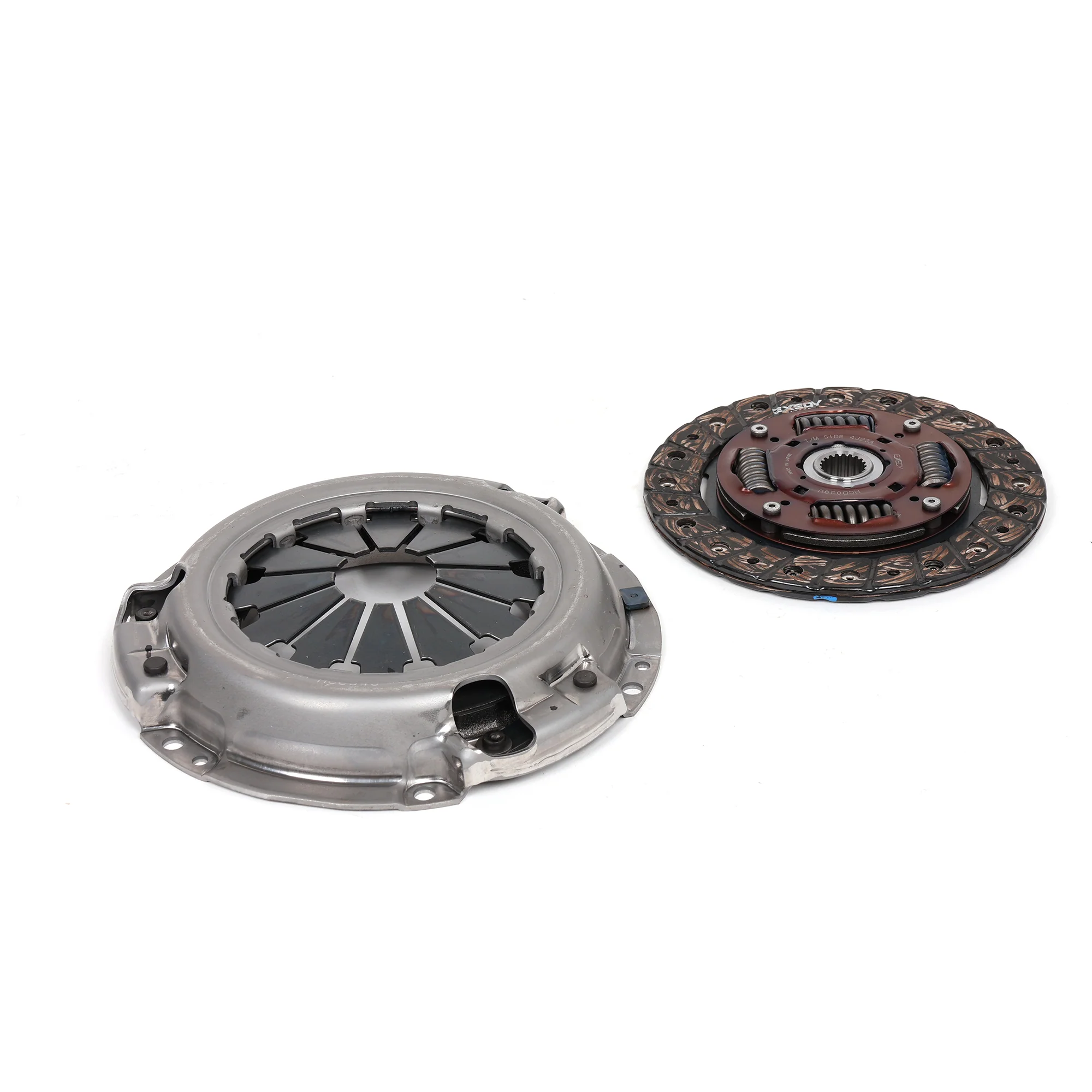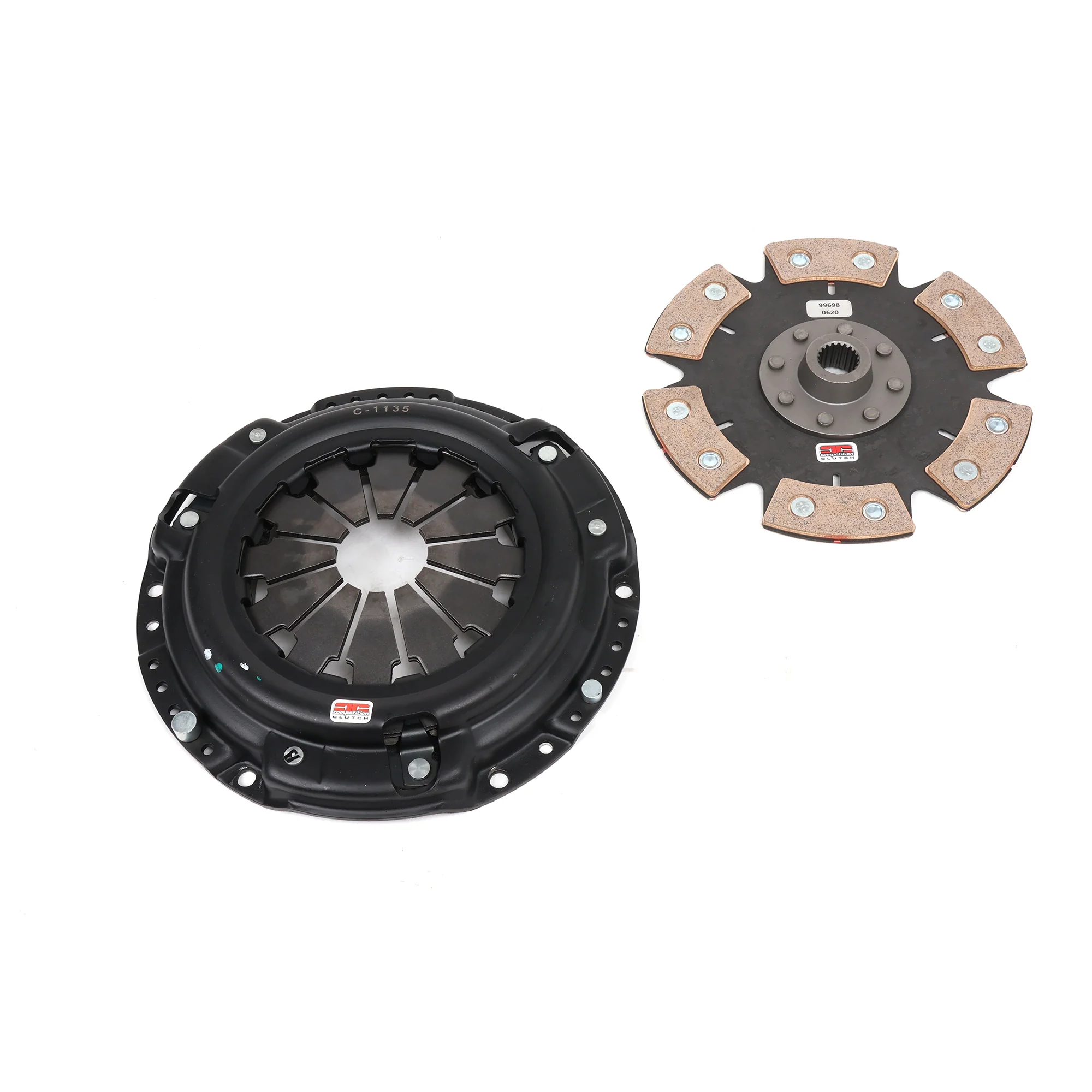
Competition Clutch Stage 4 Clutch Kit for D15/D16 Civic
- 250% increase in torque capacity.
- Durable ceramic buttons on disc.
- Includes performance pressure plate.
- Compatible with 1992-2005 Honda Civics.
- 90-day warranty for peace of mind.
- Description
- Vehicle Fitment
- Technical Data
- Install Guide
-
Competition Clutch Stage 4 Rigid 6-Puck Ceramic Clutch Kit - D-Series Hydraulic (1992-2005)
Building a turbo D-series that lives at the track and need a clutch that'll hold serious power and bang through gears as fast as you can move your hand? This is Competition Clutch's Stage 4 Strip Series (0620) kit for hydraulic D-series Hondas. It fits 1992-2005 Civic and 1993-1997 del Sol models running D15, D16, or D17 engines with hydraulic clutch actuation, and it holds up to 250% more torque than stock thanks to a 1,500 lb pressure plate and a 6-puck rigid ceramic disc.
Now the part you have to read: this is the rigid disc version, and it's a full-on race clutch. If you're after a Stage 4 you can actually daily drive, you don't want this one, you want the sprung 8022-1620 instead. The difference between the two is big enough that grabbing the wrong one will genuinely make you miserable, so do yourself a favor and keep reading before you order.
Rigid (0620) vs Sprung (1620): Why It Matters So Much
Competition Clutch offers the D-series Stage 4 in two disc setups, and here's the thing, they use the exact same pressure plate, the same ceramic friction material, the same 250% torque capacity, and the same 6-puck layout. The only difference is the disc hub. Sounds small, but it completely changes how the clutch feels to live with.
Stage 4 Rigid (0620), This Kit Stage 4 Sprung (1620) Hub Design Solid, one-piece, no springs Double-spring, six-rivet carriage Engagement Feel On/off, like a light switch Still aggressive, but springs cushion the grab Chatter Significant, constant at low RPM Present but manageable after break-in Disc Weight Lighter (no spring assembly) Heavier (spring dampener adds mass) Shift Speed Faster (lighter disc, synchros match quicker) Slightly slower Drivetrain Impact Hard on synchros, thrust bearings, axles Springs absorb some shock loading Streetability Race only. Miserable in traffic. Livable on the street with practice Best For Drag, time attack, dedicated track car Street/strip, turbo daily, weekend warrior Here's what's going on. The rigid disc ditches the spring assembly completely, which makes it lighter, and a lighter disc lets your transmission's synchros match shaft speed faster when you shift. That's the upside, quicker shifts. The downside is that every time the clutch engages, those ceramic pads grab the flywheel with zero cushion. There's no gradual take-up, no progressive zone where you can feather it. It either grabs or it doesn't. People call it a light switch, and honestly, that's exactly right.
In a race car, that's precisely what you want. You drop the clutch at the line, bang through the gears as fast as you can, and the clutch either holds or it doesn't, comfort isn't part of the equation, shift speed is. But on a street car crawling through stop-and-go traffic, that same behavior means stalling at lights, lurching through parking lots, constant low-RPM chatter, and a lot more wear on your transmission internals. The springs in the 1620 disc exist for one reason: to soak up the engagement shock that would otherwise hammer your synchros and thrust bearings on every single shift.
So if there's any chance this car sees regular street time, buy the sprung version (8022-1620). It holds the same power, uses the same pressure plate, and it's a lot easier on your transmission. All you give up is a little shift speed and a little disc weight, and neither of those matters on the street.
Who This Kit Is Actually For
This clutch makes sense for a pretty narrow group of builds. If you're one of these, you're in the right spot:
Turbo D-series drag cars. You've got a built D16 or D15 on a big turbo making 300+ whp, the car lives at the strip, and you want the fastest shifts you can get with maximum holding power. The lighter rigid disc plays right into the aggressive engagement you need for consistent launches, and you're not sweating transmission longevity because you're refreshing it between seasons anyway.
Time attack and road course cars. You need every bit of torque capacity and the quickest shifts you can get through a 20-minute session. The rigid disc's lighter weight helps the engine rev quicker between gears, and the instant engagement means you're not bleeding power during shifts. Chatter and comfort just don't matter when you're on the clock.
Budget race builds where a twin disc isn't happening. A Competition Clutch twin disc holds more power and actually drives nicer on the street than a single rigid 6-puck, but it costs a good bit more. If you need race-level holding power on a single-disc budget, this 0620 gets you there.
And here's who shouldn't touch it: street cars. Even if you tell yourself you "don't mind" harsh engagement, the rigid disc chews up your synchros, thrust bearings, and axles a little more every time you shift. D-series transmissions aren't exactly bulletproof to begin with, so that's asking for trouble. The sprung disc soaks up that shock, and at the same power and the same torque capacity, it protects your drivetrain far better for street use.
Do You Actually Need a Stage 4?
Real talk, because a lot of people overbuy here. Your stock D-series clutch handles roughly 100-130 ft-lbs depending on the engine, and a 250% bump puts this Stage 4 somewhere around 350+ ft-lbs of holding capacity, which covers builds well into the 300-400+ whp range on a turbo D-series. Here's how to figure out what you really need:
Your Power Level What You Actually Need Stock to bolt-ons (under 150 whp) Stock replacement or Stage 1. A 6-puck is absurd overkill here. Mild turbo (150-200 whp) Stage 2 full-face (8022-2100). Holds the power, drives like stock. Moderate turbo (200-300 whp) Stage 3 segmented ceramic (8022-2600). Best street/strip balance. Big turbo (300-400+ whp), street driven Stage 4 Sprung (8022-1620). Same holding power, livable pedal. Big turbo (300-400+ whp), race only Stage 4 Rigid (8022-0620). This kit. Maximum shift speed, race use. 400+ whp or hard drag launches on slicks Twin disc. Single disc clutches are at their limit here. Bottom line: if you're under 300 whp, you're overbuying. A Stage 3 full-face ceramic holds 150% more torque than stock, drives a whole lot nicer, and won't beat up your transmission. The only reason to jump to a Stage 4 is that a Stage 3 is already slipping under boost, or you're building for a number where it will.
What's In The Kit
- Competition Clutch performance pressure plate. 1,500 lb clamping force, the same plate used in the sprung 1620 kit. Expect a noticeably heavier pedal than stock. The hydraulic actuation on these D-series cars takes some of the edge off compared to cable setups, but you'll still feel it.
- 6-puck rigid ceramic disc (0620 series). Six ceramic pads (12 total, both sides) on a solid, unsprung hub. No springs, no dampening, no progressive engagement. The ceramic handles serious heat, which is exactly what you want during sustained track use, and the rigid hub is lighter than the sprung one, so you shift faster.
- Throw-out (release) bearing. Included, and you always replace it with a clutch swap. That 1,500 lb pressure plate loads the TOB harder than stock, so don't gamble on the old one.
- Pilot bearing. Included. Replace it every time, it's a cheap part with expensive labor to reach later.
- Alignment tool. For centering the disc on the flywheel during install.
The flywheel isn't included. Since you've got the transmission out anyway, replace or resurface your flywheel while you're in there. For a race build with this rigid disc, the go-to pairing is the Competition Clutch ultra-lightweight flywheel (2-702-STU, 8.8 lbs), the lighter flywheel and lighter rigid disc together cut rotational mass for the quickest possible revving and shifting. If you want something a little less aggressive, the CC lightweight (2-702-ST, 11.44 lbs) works great.
What It's Actually Like To Drive
The D-series crowd has been running rigid 6-puck setups in turbo builds for years, so there's no mystery here. This is what you're signing up for:
Engagement is binary. You can't feather a rigid 6-puck, it's either engaged or it isn't. There's a narrow RPM window, a few hundred RPM, where it engages cleanly from a stop. Drop below it and you stall, get above it and you lurch or chirp the tires. With practice you'll train your foot to that window, but it takes real focus in traffic. One D-series builder put it perfectly: you've got to drive the car, not just sit in it.
Chatter is constant at low RPM. First and second gear at low speed will rattle and vibrate, and that's completely normal for a rigid puck clutch, it's the ceramic pads hitting the flywheel with no spring dampening to smooth out the engagement pulses. It sounds worse than it actually is, but your passengers will notice, and it never fully goes away.
Shifts are fast, and that's the whole point. The lighter hub lets your synchros match shaft speed quicker, and paired with the instant engagement, your gear changes just happen faster. On a drag car banging gears at 8,000+ RPM, that adds up to measurably quicker runs. Cruising the street at 3,500 RPM, though, you honestly won't feel a difference from the sprung version.
Your transmission takes a beating. With no springs to absorb the engagement shock, every shift sends the full hit straight into the input shaft, synchros, and thrust bearings. D-series gearboxes (S20, S40, S80, Y8) just aren't built to eat that kind of abuse over tens of thousands of miles. On a race car that gets refreshed regularly, no big deal. On a car you drive 15,000 miles a year in the city, you're shortening the trans's life, and the community consensus is dead clear: unsprung discs on D-series are fine for race cars you rebuild between seasons, and a bad idea for daily drivers.
Break-in takes 300 miles. Drive it easy, no hard launches, no aggressive shifts, no slipping the clutch. The ceramic pads need to bed into the flywheel. During break-in the engagement is especially harsh and inconsistent, and it does get better once the pads seat, but it never goes "smooth" the way a full-face disc does.
Fits These Cars
The 8022 prefix is Competition Clutch's designation for D-series hydraulic clutch applications. This kit fits 1992-2005 Civic and 1993-1997 del Sol models with D15, D16, or D17 engines and factory hydraulic clutch systems.
Chassis Vehicle Years Engines Trims EG Honda Civic 1992-1995 D15B7, D15B8, D15Z1, D16Z6 CX, DX, EX, LX, Si, VX EG Honda Civic del Sol 1993-1997 D15B7, D16Z6, D16Y8 S, Si, VTEC EK Honda Civic 1996-2000 D15Z1, D16Y5, D16Y7, D16Y8 CX, DX, EX, HX, LX, Si EM2/ES1 Honda Civic 2001-2005 D17A1, D17A2, D17A6, D17A7 DX, EX, HX, LX, Value Package Manufacturer Part Number: 8022-0620
Series: Stage 4, Strip Series 0620 (Rigid/Unsprung)
Disc: 6-puck rigid ceramic, solid hub, 12 ceramic friction pads
Disc Size: 212mm x 7/8" x 20 spline
Pressure Plate Load: 1,500 lbs
Torque Capacity: up to 250% increase over stock
Break-In: 300 miles minimum
Flywheel: not included, sold separately
Warranty: 90 days from retail purchase through an authorized dealerThis Kit Does NOT Fit
Heads-up, because some fitment databases get this wrong: the 8022-0620 is strictly for hydraulic D-series applications (1992-2005). It does not fit:
- 1988-1991 Civic or CRX (EF chassis). These use a cable clutch, not hydraulic. You need the 8012 prefix for cable D-series.
- 2006-2011 Civic (8th gen). R18A or K20Z3 engine, a completely different clutch assembly.
- 2012 and up Civic (9th, 10th, 11th gen). Different engines, different clutch, not compatible.
- FK8 or FL5 Civic Type R. K20C1 engine, an entirely different clutch assembly.
- Any B-series, K-series, or H-series swap. The clutch matches your transmission, not your chassis. If you've swapped in a non-D-series engine and its trans, you need the clutch that matches that swap transmission.
Before You Install It
- Replace or resurface the flywheel. A glazed, heat-checked, or warped flywheel won't let the ceramic pads bed in right and will give you uneven engagement. Reusing your stock flywheel? Have a machine shop resurface it first. For a race build, pair it with the Competition Clutch ultra-lightweight flywheel (2-702-STU).
- Replace the throw-out and pilot bearing every time. Both are in the kit. That 1,500 lb pressure plate loads the TOB way harder than stock, so don't reuse the old one.
- Check your rear main seal. Oil on the friction surface makes the clutch slip no matter how hard it clamps, so fix any leaks before the new clutch goes in.
- Bleed the hydraulic system thoroughly. Air in the line makes your engagement point inconsistent, and it's already touchy on a rigid 6-puck. Fresh fluid, full bleed, no bubbles.
- Do the full 300-mile break-in. Drive gently and let the pads seat into the flywheel. It'll feel terrible during break-in, and it won't turn "nice" afterward, but it will get consistent, which is what you need for repeatable launches.
- Look at your axles. The instant engagement of a rigid disc sends shock loads through the drivetrain that a sprung or full-face disc would soak up. On a turbo D-series making 300+ whp, stock axles are a known weak point, so budget for upgraded axles if you're launching hard.
Common Questions
What's the difference between this (8022-0620) and the 8022-1620?
Just the disc. The 0620 has a rigid, unsprung hub with no dampening springs. The 1620 has a sprung hub that cushions engagement. Both hold the same power off the same pressure plate. The rigid's lighter and shifts faster, the sprung's more livable and easier on your transmission.Can I daily drive this?
Technically yes, people have done it. But the D-series forum consensus is clear: an unsprung 6-puck on a D-series trans is a rough combo for daily driving. The lack of dampening speeds up wear on your synchros and thrust bearings, you'll stall more in traffic, and first gear will chatter constantly. If this is your only car, get the sprung 8022-1620, it holds the same power.I've got a 1988-1991 EF Civic or CRX. Will this fit?
No. The EF uses a cable clutch, not hydraulic, so you need the 8012 prefix. The 8012-0620 is the rigid Stage 4 for cable D-series, and the 8012-1620 is the sprung version.I'm doing a B-series or K-series swap. Will this work?
No. The clutch matches the transmission, not the car. If you've swapped in a B-series with a hydraulic B-series trans, you need the 8026 prefix. K-series swaps use a completely different clutch (8037 prefix at Competition Clutch).Is the Stage 5 (4-puck) even more aggressive than this?
Yep. The Stage 5 (1420 series) runs a 4-puck sprung disc, and fewer pucks means less friction area, so the engagement per pad is even more aggressive. It holds up to 300% more torque, but it's also harder on disc life since fewer pads share the load. For most D-series turbo builds, the 6-puck Stage 4 is the better balance of holding power and disc longevity.Should I just go straight to a twin disc?
If your budget allows and you're making 350+ whp, honestly, yes. Competition Clutch's D-series twin disc actually drives smoother on the street than this single rigid 6-puck while holding more power, because it uses two smaller, lighter discs with more total friction area, so each disc takes less abuse per shift. The only real trade-off is cost.Who Should Buy This, And Who Shouldn't
Buy this if: your turbo D-series makes 300+ whp, the car's a dedicated drag, track, or time attack build, you want the lightest possible disc and the fastest shifts, you're fine refreshing a D-series trans now and then, and you don't care about chatter or comfort because the car doesn't see traffic.
Buy the sprung 8022-1620 instead if: you make the same power but drive the car on the street, you want that holding capacity without hammering your transmission, and you're not chasing tenths at the strip where shift speed actually matters.
Buy a Stage 3 instead if: your build's under 300 whp. The Stage 3 segmented ceramic full-face (8022-2600) holds 150% more torque, drives a lot closer to stock, and won't chatter or rattle. For most turbo D-series builds, it's the right call.
Don't buy any Stage 4 if: your car's stock or naturally aspirated with bolt-ons. The stock clutch handles NA power just fine, and slapping a 6-puck ceramic on a 100 hp D15 is all pain and zero gain.
Note: Competition Clutch Stage 4 Strip Series clutch kit, part number 8022-0620, for hydraulic D-series Hondas (1992-2005 Civic and 1993-1997 del Sol with D15, D16, or D17 engines). This is the rigid (unsprung) 6-puck ceramic disc version, a race clutch rated up to 250% over stock torque capacity with a 1,500 lb pressure plate. The rigid disc gives faster shifts and on/off engagement with significant low-RPM chatter, and is intended for dedicated drag, track, and time attack cars making roughly 300+ whp, not for street use; street-driven cars at the same power should choose the sprung version (8022-1620). Kit includes the pressure plate, 6-puck rigid ceramic disc, throw-out bearing, pilot bearing, and alignment tool. Flywheel is not included. Requires a 300-mile break-in. Fits factory hydraulic D-series applications only and does not fit EF cable-clutch cars (use the 8012 prefix), 2006 and newer Civics, Type R models, or B/K/H-series swaps. Warranty is 90 days from retail purchase through an authorized dealer. One clutch kit per order.
-
1996-2000 Honda Civic
1992-1995 Honda Civic
2001-2005 Honda Civic
2001-2005 Honda Civic EX
1993-1997 Honda Civic del Sol
Original: $525.00
-65%$525.00
$183.75Product Information
Product Information
Shipping & Returns
Shipping & Returns
Description
- 250% increase in torque capacity.
- Durable ceramic buttons on disc.
- Includes performance pressure plate.
- Compatible with 1992-2005 Honda Civics.
- 90-day warranty for peace of mind.
- Description
- Vehicle Fitment
- Technical Data
- Install Guide
-
Competition Clutch Stage 4 Rigid 6-Puck Ceramic Clutch Kit - D-Series Hydraulic (1992-2005)
Building a turbo D-series that lives at the track and need a clutch that'll hold serious power and bang through gears as fast as you can move your hand? This is Competition Clutch's Stage 4 Strip Series (0620) kit for hydraulic D-series Hondas. It fits 1992-2005 Civic and 1993-1997 del Sol models running D15, D16, or D17 engines with hydraulic clutch actuation, and it holds up to 250% more torque than stock thanks to a 1,500 lb pressure plate and a 6-puck rigid ceramic disc.
Now the part you have to read: this is the rigid disc version, and it's a full-on race clutch. If you're after a Stage 4 you can actually daily drive, you don't want this one, you want the sprung 8022-1620 instead. The difference between the two is big enough that grabbing the wrong one will genuinely make you miserable, so do yourself a favor and keep reading before you order.
Rigid (0620) vs Sprung (1620): Why It Matters So Much
Competition Clutch offers the D-series Stage 4 in two disc setups, and here's the thing, they use the exact same pressure plate, the same ceramic friction material, the same 250% torque capacity, and the same 6-puck layout. The only difference is the disc hub. Sounds small, but it completely changes how the clutch feels to live with.
Stage 4 Rigid (0620), This Kit Stage 4 Sprung (1620) Hub Design Solid, one-piece, no springs Double-spring, six-rivet carriage Engagement Feel On/off, like a light switch Still aggressive, but springs cushion the grab Chatter Significant, constant at low RPM Present but manageable after break-in Disc Weight Lighter (no spring assembly) Heavier (spring dampener adds mass) Shift Speed Faster (lighter disc, synchros match quicker) Slightly slower Drivetrain Impact Hard on synchros, thrust bearings, axles Springs absorb some shock loading Streetability Race only. Miserable in traffic. Livable on the street with practice Best For Drag, time attack, dedicated track car Street/strip, turbo daily, weekend warrior Here's what's going on. The rigid disc ditches the spring assembly completely, which makes it lighter, and a lighter disc lets your transmission's synchros match shaft speed faster when you shift. That's the upside, quicker shifts. The downside is that every time the clutch engages, those ceramic pads grab the flywheel with zero cushion. There's no gradual take-up, no progressive zone where you can feather it. It either grabs or it doesn't. People call it a light switch, and honestly, that's exactly right.
In a race car, that's precisely what you want. You drop the clutch at the line, bang through the gears as fast as you can, and the clutch either holds or it doesn't, comfort isn't part of the equation, shift speed is. But on a street car crawling through stop-and-go traffic, that same behavior means stalling at lights, lurching through parking lots, constant low-RPM chatter, and a lot more wear on your transmission internals. The springs in the 1620 disc exist for one reason: to soak up the engagement shock that would otherwise hammer your synchros and thrust bearings on every single shift.
So if there's any chance this car sees regular street time, buy the sprung version (8022-1620). It holds the same power, uses the same pressure plate, and it's a lot easier on your transmission. All you give up is a little shift speed and a little disc weight, and neither of those matters on the street.
Who This Kit Is Actually For
This clutch makes sense for a pretty narrow group of builds. If you're one of these, you're in the right spot:
Turbo D-series drag cars. You've got a built D16 or D15 on a big turbo making 300+ whp, the car lives at the strip, and you want the fastest shifts you can get with maximum holding power. The lighter rigid disc plays right into the aggressive engagement you need for consistent launches, and you're not sweating transmission longevity because you're refreshing it between seasons anyway.
Time attack and road course cars. You need every bit of torque capacity and the quickest shifts you can get through a 20-minute session. The rigid disc's lighter weight helps the engine rev quicker between gears, and the instant engagement means you're not bleeding power during shifts. Chatter and comfort just don't matter when you're on the clock.
Budget race builds where a twin disc isn't happening. A Competition Clutch twin disc holds more power and actually drives nicer on the street than a single rigid 6-puck, but it costs a good bit more. If you need race-level holding power on a single-disc budget, this 0620 gets you there.
And here's who shouldn't touch it: street cars. Even if you tell yourself you "don't mind" harsh engagement, the rigid disc chews up your synchros, thrust bearings, and axles a little more every time you shift. D-series transmissions aren't exactly bulletproof to begin with, so that's asking for trouble. The sprung disc soaks up that shock, and at the same power and the same torque capacity, it protects your drivetrain far better for street use.
Do You Actually Need a Stage 4?
Real talk, because a lot of people overbuy here. Your stock D-series clutch handles roughly 100-130 ft-lbs depending on the engine, and a 250% bump puts this Stage 4 somewhere around 350+ ft-lbs of holding capacity, which covers builds well into the 300-400+ whp range on a turbo D-series. Here's how to figure out what you really need:
Your Power Level What You Actually Need Stock to bolt-ons (under 150 whp) Stock replacement or Stage 1. A 6-puck is absurd overkill here. Mild turbo (150-200 whp) Stage 2 full-face (8022-2100). Holds the power, drives like stock. Moderate turbo (200-300 whp) Stage 3 segmented ceramic (8022-2600). Best street/strip balance. Big turbo (300-400+ whp), street driven Stage 4 Sprung (8022-1620). Same holding power, livable pedal. Big turbo (300-400+ whp), race only Stage 4 Rigid (8022-0620). This kit. Maximum shift speed, race use. 400+ whp or hard drag launches on slicks Twin disc. Single disc clutches are at their limit here. Bottom line: if you're under 300 whp, you're overbuying. A Stage 3 full-face ceramic holds 150% more torque than stock, drives a whole lot nicer, and won't beat up your transmission. The only reason to jump to a Stage 4 is that a Stage 3 is already slipping under boost, or you're building for a number where it will.
What's In The Kit
- Competition Clutch performance pressure plate. 1,500 lb clamping force, the same plate used in the sprung 1620 kit. Expect a noticeably heavier pedal than stock. The hydraulic actuation on these D-series cars takes some of the edge off compared to cable setups, but you'll still feel it.
- 6-puck rigid ceramic disc (0620 series). Six ceramic pads (12 total, both sides) on a solid, unsprung hub. No springs, no dampening, no progressive engagement. The ceramic handles serious heat, which is exactly what you want during sustained track use, and the rigid hub is lighter than the sprung one, so you shift faster.
- Throw-out (release) bearing. Included, and you always replace it with a clutch swap. That 1,500 lb pressure plate loads the TOB harder than stock, so don't gamble on the old one.
- Pilot bearing. Included. Replace it every time, it's a cheap part with expensive labor to reach later.
- Alignment tool. For centering the disc on the flywheel during install.
The flywheel isn't included. Since you've got the transmission out anyway, replace or resurface your flywheel while you're in there. For a race build with this rigid disc, the go-to pairing is the Competition Clutch ultra-lightweight flywheel (2-702-STU, 8.8 lbs), the lighter flywheel and lighter rigid disc together cut rotational mass for the quickest possible revving and shifting. If you want something a little less aggressive, the CC lightweight (2-702-ST, 11.44 lbs) works great.
What It's Actually Like To Drive
The D-series crowd has been running rigid 6-puck setups in turbo builds for years, so there's no mystery here. This is what you're signing up for:
Engagement is binary. You can't feather a rigid 6-puck, it's either engaged or it isn't. There's a narrow RPM window, a few hundred RPM, where it engages cleanly from a stop. Drop below it and you stall, get above it and you lurch or chirp the tires. With practice you'll train your foot to that window, but it takes real focus in traffic. One D-series builder put it perfectly: you've got to drive the car, not just sit in it.
Chatter is constant at low RPM. First and second gear at low speed will rattle and vibrate, and that's completely normal for a rigid puck clutch, it's the ceramic pads hitting the flywheel with no spring dampening to smooth out the engagement pulses. It sounds worse than it actually is, but your passengers will notice, and it never fully goes away.
Shifts are fast, and that's the whole point. The lighter hub lets your synchros match shaft speed quicker, and paired with the instant engagement, your gear changes just happen faster. On a drag car banging gears at 8,000+ RPM, that adds up to measurably quicker runs. Cruising the street at 3,500 RPM, though, you honestly won't feel a difference from the sprung version.
Your transmission takes a beating. With no springs to absorb the engagement shock, every shift sends the full hit straight into the input shaft, synchros, and thrust bearings. D-series gearboxes (S20, S40, S80, Y8) just aren't built to eat that kind of abuse over tens of thousands of miles. On a race car that gets refreshed regularly, no big deal. On a car you drive 15,000 miles a year in the city, you're shortening the trans's life, and the community consensus is dead clear: unsprung discs on D-series are fine for race cars you rebuild between seasons, and a bad idea for daily drivers.
Break-in takes 300 miles. Drive it easy, no hard launches, no aggressive shifts, no slipping the clutch. The ceramic pads need to bed into the flywheel. During break-in the engagement is especially harsh and inconsistent, and it does get better once the pads seat, but it never goes "smooth" the way a full-face disc does.
Fits These Cars
The 8022 prefix is Competition Clutch's designation for D-series hydraulic clutch applications. This kit fits 1992-2005 Civic and 1993-1997 del Sol models with D15, D16, or D17 engines and factory hydraulic clutch systems.
Chassis Vehicle Years Engines Trims EG Honda Civic 1992-1995 D15B7, D15B8, D15Z1, D16Z6 CX, DX, EX, LX, Si, VX EG Honda Civic del Sol 1993-1997 D15B7, D16Z6, D16Y8 S, Si, VTEC EK Honda Civic 1996-2000 D15Z1, D16Y5, D16Y7, D16Y8 CX, DX, EX, HX, LX, Si EM2/ES1 Honda Civic 2001-2005 D17A1, D17A2, D17A6, D17A7 DX, EX, HX, LX, Value Package Manufacturer Part Number: 8022-0620
Series: Stage 4, Strip Series 0620 (Rigid/Unsprung)
Disc: 6-puck rigid ceramic, solid hub, 12 ceramic friction pads
Disc Size: 212mm x 7/8" x 20 spline
Pressure Plate Load: 1,500 lbs
Torque Capacity: up to 250% increase over stock
Break-In: 300 miles minimum
Flywheel: not included, sold separately
Warranty: 90 days from retail purchase through an authorized dealerThis Kit Does NOT Fit
Heads-up, because some fitment databases get this wrong: the 8022-0620 is strictly for hydraulic D-series applications (1992-2005). It does not fit:
- 1988-1991 Civic or CRX (EF chassis). These use a cable clutch, not hydraulic. You need the 8012 prefix for cable D-series.
- 2006-2011 Civic (8th gen). R18A or K20Z3 engine, a completely different clutch assembly.
- 2012 and up Civic (9th, 10th, 11th gen). Different engines, different clutch, not compatible.
- FK8 or FL5 Civic Type R. K20C1 engine, an entirely different clutch assembly.
- Any B-series, K-series, or H-series swap. The clutch matches your transmission, not your chassis. If you've swapped in a non-D-series engine and its trans, you need the clutch that matches that swap transmission.
Before You Install It
- Replace or resurface the flywheel. A glazed, heat-checked, or warped flywheel won't let the ceramic pads bed in right and will give you uneven engagement. Reusing your stock flywheel? Have a machine shop resurface it first. For a race build, pair it with the Competition Clutch ultra-lightweight flywheel (2-702-STU).
- Replace the throw-out and pilot bearing every time. Both are in the kit. That 1,500 lb pressure plate loads the TOB way harder than stock, so don't reuse the old one.
- Check your rear main seal. Oil on the friction surface makes the clutch slip no matter how hard it clamps, so fix any leaks before the new clutch goes in.
- Bleed the hydraulic system thoroughly. Air in the line makes your engagement point inconsistent, and it's already touchy on a rigid 6-puck. Fresh fluid, full bleed, no bubbles.
- Do the full 300-mile break-in. Drive gently and let the pads seat into the flywheel. It'll feel terrible during break-in, and it won't turn "nice" afterward, but it will get consistent, which is what you need for repeatable launches.
- Look at your axles. The instant engagement of a rigid disc sends shock loads through the drivetrain that a sprung or full-face disc would soak up. On a turbo D-series making 300+ whp, stock axles are a known weak point, so budget for upgraded axles if you're launching hard.
Common Questions
What's the difference between this (8022-0620) and the 8022-1620?
Just the disc. The 0620 has a rigid, unsprung hub with no dampening springs. The 1620 has a sprung hub that cushions engagement. Both hold the same power off the same pressure plate. The rigid's lighter and shifts faster, the sprung's more livable and easier on your transmission.Can I daily drive this?
Technically yes, people have done it. But the D-series forum consensus is clear: an unsprung 6-puck on a D-series trans is a rough combo for daily driving. The lack of dampening speeds up wear on your synchros and thrust bearings, you'll stall more in traffic, and first gear will chatter constantly. If this is your only car, get the sprung 8022-1620, it holds the same power.I've got a 1988-1991 EF Civic or CRX. Will this fit?
No. The EF uses a cable clutch, not hydraulic, so you need the 8012 prefix. The 8012-0620 is the rigid Stage 4 for cable D-series, and the 8012-1620 is the sprung version.I'm doing a B-series or K-series swap. Will this work?
No. The clutch matches the transmission, not the car. If you've swapped in a B-series with a hydraulic B-series trans, you need the 8026 prefix. K-series swaps use a completely different clutch (8037 prefix at Competition Clutch).Is the Stage 5 (4-puck) even more aggressive than this?
Yep. The Stage 5 (1420 series) runs a 4-puck sprung disc, and fewer pucks means less friction area, so the engagement per pad is even more aggressive. It holds up to 300% more torque, but it's also harder on disc life since fewer pads share the load. For most D-series turbo builds, the 6-puck Stage 4 is the better balance of holding power and disc longevity.Should I just go straight to a twin disc?
If your budget allows and you're making 350+ whp, honestly, yes. Competition Clutch's D-series twin disc actually drives smoother on the street than this single rigid 6-puck while holding more power, because it uses two smaller, lighter discs with more total friction area, so each disc takes less abuse per shift. The only real trade-off is cost.Who Should Buy This, And Who Shouldn't
Buy this if: your turbo D-series makes 300+ whp, the car's a dedicated drag, track, or time attack build, you want the lightest possible disc and the fastest shifts, you're fine refreshing a D-series trans now and then, and you don't care about chatter or comfort because the car doesn't see traffic.
Buy the sprung 8022-1620 instead if: you make the same power but drive the car on the street, you want that holding capacity without hammering your transmission, and you're not chasing tenths at the strip where shift speed actually matters.
Buy a Stage 3 instead if: your build's under 300 whp. The Stage 3 segmented ceramic full-face (8022-2600) holds 150% more torque, drives a lot closer to stock, and won't chatter or rattle. For most turbo D-series builds, it's the right call.
Don't buy any Stage 4 if: your car's stock or naturally aspirated with bolt-ons. The stock clutch handles NA power just fine, and slapping a 6-puck ceramic on a 100 hp D15 is all pain and zero gain.
Note: Competition Clutch Stage 4 Strip Series clutch kit, part number 8022-0620, for hydraulic D-series Hondas (1992-2005 Civic and 1993-1997 del Sol with D15, D16, or D17 engines). This is the rigid (unsprung) 6-puck ceramic disc version, a race clutch rated up to 250% over stock torque capacity with a 1,500 lb pressure plate. The rigid disc gives faster shifts and on/off engagement with significant low-RPM chatter, and is intended for dedicated drag, track, and time attack cars making roughly 300+ whp, not for street use; street-driven cars at the same power should choose the sprung version (8022-1620). Kit includes the pressure plate, 6-puck rigid ceramic disc, throw-out bearing, pilot bearing, and alignment tool. Flywheel is not included. Requires a 300-mile break-in. Fits factory hydraulic D-series applications only and does not fit EF cable-clutch cars (use the 8012 prefix), 2006 and newer Civics, Type R models, or B/K/H-series swaps. Warranty is 90 days from retail purchase through an authorized dealer. One clutch kit per order.
-
1996-2000 Honda Civic
1992-1995 Honda Civic
2001-2005 Honda Civic
2001-2005 Honda Civic EX
1993-1997 Honda Civic del Sol